


How to Select Diamond and CBN Grinding Wheels for Different Roll Materials
Roll grinding is a precision machining process used to restore roll geometry and achieve the required surface finish in industrial production. In steel rolling applications, the grinding wheel must be matched to the roll material, hardness, stock removal and finishing requirements.
Selecting a suitable roll grinding wheel involves more than choosing an abrasive or grit size. Diamond and cubic boron nitride (CBN) are used for different roll materials, while the bond structure, wheel dimensions, dressing method and machine conditions influence the overall grinding process.
For manufacturers looking to improve roll surface quality, reduce grinding time or maintain consistent production, understanding these selection factors is an important step toward establishing a reliable grinding process.
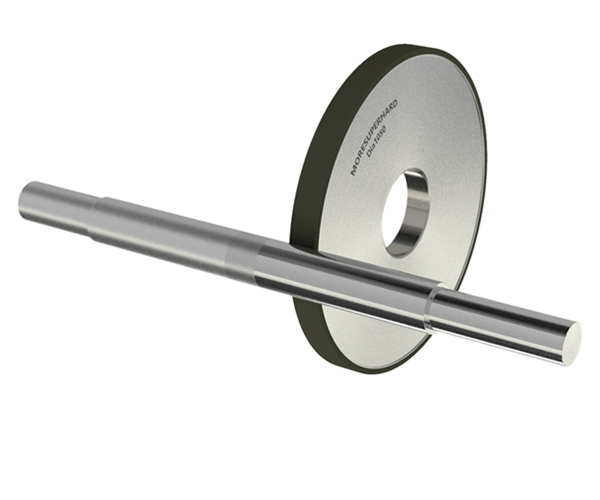
Common Roll Grinding Applications
–Steel mill roll grinding: Regrinding work rolls and backup rolls used in hot and cold rolling mills.
–Hot mill roll grinding: Processing rolls exposed to high temperatures and demanding rolling conditions.
–Cold mill roll grinding: Maintaining roll geometry and surface finish for cold-rolled products.
–Aluminum roll grinding: Maintaining the surface condition and geometry of rolls used in aluminum processing.
–Paper and textile roll grinding: Restoring the required profile and surface condition of industrial rolls.
The objective is to achieve the required roll geometry and surface finish while controlling grinding time, wheel consumption, and operating costs.
2. How Roll Material Affects Grinding Wheel Selection
The first step in selecting a roll grinding wheel is to identify the workpiece material. Different materials have different hardness, wear characteristics and grinding requirements.
Diamond Grinding Wheels for Tungsten Carbide Rolls
Tungsten carbide rolls are hard, wear-resistant components that require suitable abrasive tools for precision grinding.
Diamond grinding wheels are widely used for grinding cemented carbide because diamond offers high hardness and effective cutting performance on this material.
EHWA’s published roll grinding catalogue includes a metal-bond diamond wheel for tungsten carbide rolls. Its documented example specifies a D120L100MA wheel for a carbide roll made from tungsten carbide.
This provides a practical reference for selecting diamond abrasive when grinding carbide rolls. However, the final wheel specification should be determined according to the roll geometry, required finish, grinding allowance and machine capability.
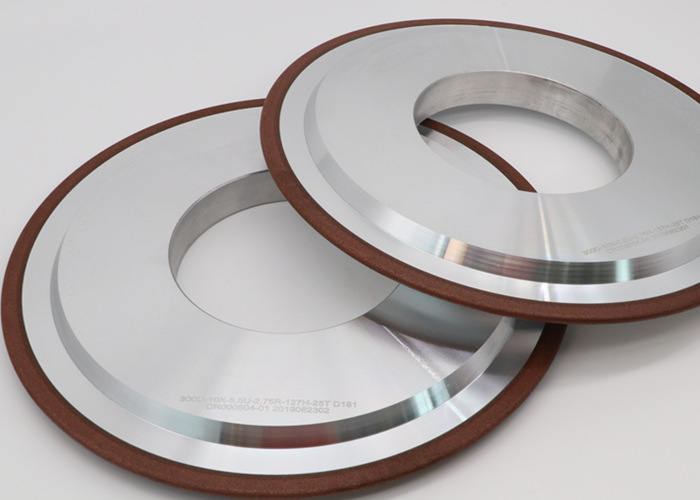
CBN Grinding Wheels for High-Speed Steel Rolls
CBN is an important abrasive for grinding hardened ferrous materials, including high-speed steel (HSS).
The appropriate CBN wheel depends on the grinding operation, desired surface quality, wheel wear characteristics and available dressing method.
For HSS roll grinding, manufacturers should evaluate abrasive grade, grit size, concentration and bond structure together rather than selecting a wheel based on abrasive type alone.
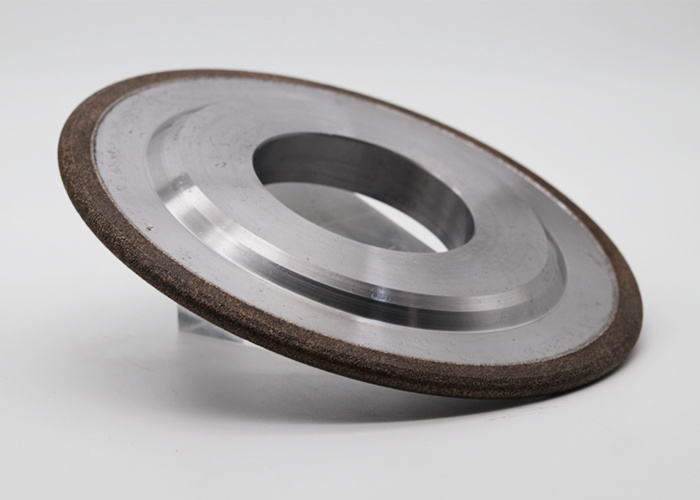
3. How to Choose the Right Bond for Roll Grinding
The bond holds the abrasive grains and influences wheel wear, cutting ability, shape retention and dressing requirements.
EHWA’s roll grinding catalogue presents resin, metal and vitrified bond solutions for different roll materials and grinding operations.
Resin Bond Grinding Wheels
Resin bond wheels are an option for roll grinding applications where cutting performance and surface finish are important.
In EHWA’s published HSS finishing-mill example, a resin-bond CBN wheel is specified as B120R100B, with wheel dimensions of 212D × 84T × 24W.
The catalogue associates resin bond with finishing applications and discusses its suitability for producing a good surface finish. This example should not be interpreted as a universal specification for every HSS roll or finishing operation.
Metal Bond Grinding Wheels
Metal bond wheels use a metal matrix to retain the abrasive grains. They are often considered where abrasive retention and wheel shape stability are important.
EHWA documents a metal-bond diamond wheel for tungsten carbide roll grinding, with the specification D120L100MA.
The appropriate bond should still be selected according to the required profile, grinding allowance, dressing capability and surface finish.
Vitrified Bond Grinding Wheels
Vitrified bond wheels combine a rigid bond structure with a pore structure that can be designed to support chip clearance and coolant access.
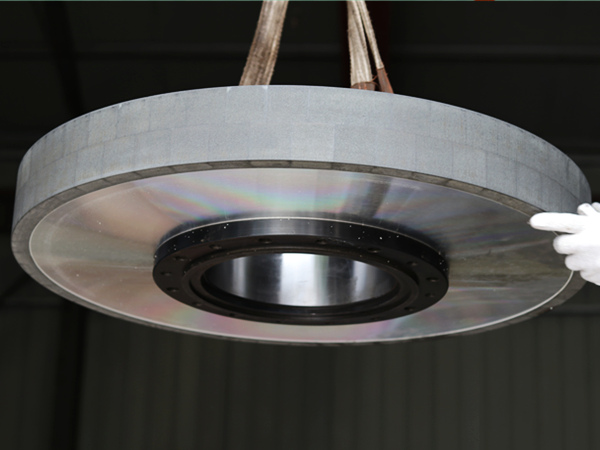
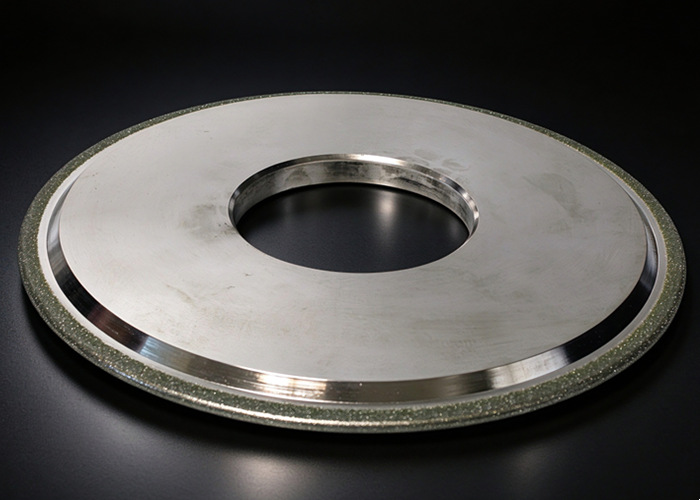
Electroplated CBN Grinding Wheels for Roll Ring Grinding
Electroplated CBN grinding wheels are another option to consider for specific roll ring grinding applications. The appropriate wheel depends on the roll ring material, grinding operation, required profile accuracy, surface finish and machine configuration.
Unlike resin-bond and vitrified-bond grinding wheels, electroplated CBN wheels use a single abrasive layer held on a metal core by an electroplated bond. This structure can be suitable for applications that require a defined grinding profile and a sharp cutting action, particularly where conventional dressing is not part of the grinding process.
When Should You Consider an Electroplated CBN Wheel?
–Profile and groove grinding: For roll ring features that require a specific wheel geometry, subject to machine and tooling compatibility.
–Hardened ferrous materials: CBN may be considered for suitable hardened steel roll rings and other ferrous workpieces.
–Reduced dressing requirements: The single-layer abrasive structure generally does not require conventional dressing to expose new abrasive grains, although cleaning or other maintenance may still be necessary.
–Customized wheel profiles: Wheel geometry and abrasive specifications can be designed around the actual roll ring and grinding operation.
5. How Grit Size Affects Roll Surface Finish
Abrasive grit size influences the cutting action and the surface texture produced during grinding.
In general, finer abrasive grains can support finer finishing, while coarser grains are often considered when greater material removal is required. The actual result also depends on wheel structure, bond, dressing and operating conditions.
The following grit sizes come from the supplied Moresuperhard technical reference and should be treated as starting points for its specific application, not as universal industry standards.
| Target Surface Roughness | Reference Wheel Grit | Intended Grinding Stage |
|---|---|---|
| Ra 0.25–0.30 μm | #600 | Precision finish grinding |
| Ra 0.25–0.30 μm | #500 | Alternative for evaluation |
| Ra 0.06–0.08 μm | #1000–#1200 | Ultra-fine finishing |
For very fine surface finishes, the wheel must be dressed appropriately, and the grinding process must be stable. Simply switching to a finer grit does not guarantee that the target Ra value will be achieved.
Before adopting a wheel specification, validate it against the actual roll material, machine, grinding allowance and measurement method.
6. How to Select a Roll Grinding Wheel for Your Application
Before requesting a diamond or CBN grinding wheel, prepare the following information.
| Selection Factor | Information Required |
|---|---|
| Roll material | Tungsten carbide, HSS, hardened steel or another material |
| Roll hardness | Actual hardness and material condition |
| Grinding stage | Rough grinding, precision finishing or ultra-fine finishing |
| Surface roughness | Required Ra value |
| Stock removal | Grinding allowance per operation |
| Wheel dimensions | Diameter, thickness, bore and profile |
| Machine | Manufacturer and model |
| Operating conditions | Wheel speed, roll speed and feed |
| Dressing method | Available dressing equipment and procedure |
| Coolant | Coolant type and delivery conditions |
Providing this information allows the wheel specification to be evaluated against the actual machining conditions.
For applications with difficult surface finish requirements, a controlled trial may be needed to determine the most suitable combination of abrasive, grit size, bond and dressing parameters.
Conclusion
Selecting the right grinding wheel for roll grinding requires a systematic approach based on workpiece material, surface finish, grinding allowance and machine conditions.
Diamond grinding wheels are an important option for tungsten carbide rolls, while CBN wheels are commonly used for HSS and other hardened ferrous materials. Resin, metal and vitrified bonds each offer different characteristics that should be evaluated according to the application.
Grit size, abrasive concentration, dressing, wheel balancing, coolant delivery and operating parameters must also be considered to achieve consistent results.
The most effective roll grinding solution is the one matched to the actual roll material, required surface quality and production conditions—not simply the wheel with the finest grit or highest abrasive concentration.
Moresuperhard manufactures diamond and CBN grinding wheels for industrial grinding applications. To discuss a roll grinding application, provide the roll material, target surface roughness, wheel dimensions, machine model and current grinding conditions.


