


Electroplated Single-Pass Diamond Honing Reamer for Unquenched Cast Iron
Introduction
In the competitive landscape of industrial manufacturing, the machining of Unquenched Cast Iron presents a distinct set of challenges. Whether producing hydraulic valves, compressor cylinders, or automotive components, manufacturers face a common dilemma: how to achieve sub-micron bore geometry while maintaining high production speeds.
Traditional internal grinding or multi-stroke honing often falls short. Tool wear is rapid, cycle times are long, and consistency varies from part to part.
This is where Moresuperhard steps in. As a premier manufacturer of superhard abrasive tools, we have engineered a solution that revolutionizes this process: the Electroplated Single-Pass Diamond Honing Reamer.
This article explores the technical superiority of our diamond reamers and presents a detailed case study demonstrating their performance in deep-bore cast iron applications.
Product Spotlight – Why Choose Electroplated Single-Pass Diamond Reamers?
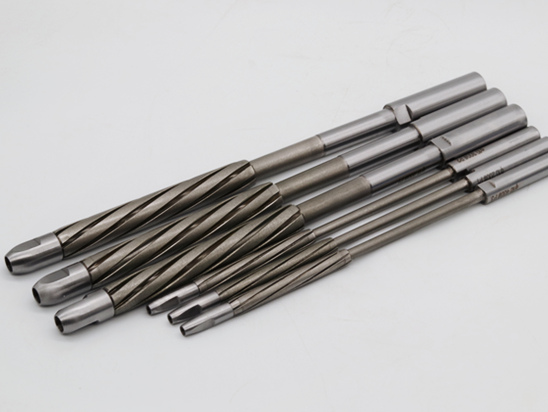
Before diving into the case study, it is crucial to understand the tool technology that makes these results possible. Our Electroplated Single-Pass Diamond Honing Reamer (often referred to as a Diamond Reamer or Single-Stroke Hone) is not just a standard cutting tool; it is a precision instrument designed for high-volume, high-accuracy production.
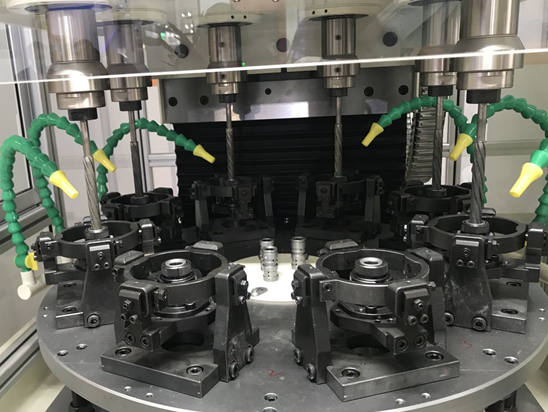
1. The Power of Electroplated Diamond Technology
Unlike resin-bond or metal-bond stones used in conventional honing, our tools utilize advanced Electroplating Technology.
- Maximum Particle Exposure: The nickel-plating process holds the synthetic diamond grit securely while leaving a higher percentage of the diamond crystal exposed. This results in a free-cutting action that is essential for Cast Iron.
- Aggressive Stock Removal: Cast iron is abrasive. Our electroplated structure allows for aggressive material removal (up to 0.06mm or more) in a single pass without generating excessive heat or stress on the workpiece.
- Rigid Geometry: The diamond is plated onto a precision-ground steel body. This rigidity ensures that the tool corrects the bore’s geometry (roundness, straightness, and cylindricity) rather than simply following the existing hole path.
2. Adjustable Sleeve Design: A Cost-Saving Innovation
A major pain point for purchasing managers is tooling cost. Solid carbide reamers, once worn, are scrap.
Moresuperhard’s reamers feature an Expandable/Adjustable Sleeve Design.
- Wear Compensation: As the diamond abrasive naturally wears down over thousands of cycles, the operator can mechanically expand the sleeve. This brings the tool back to the precise target diameter.
- Extended Tool Life: This adjustability dramatically extends the usable life of a single tool, significantly lowering the Cost Per Part (CPP).
3. Optimized Flute Geometry for Chip Evacuation
Machining Unquenched Cast Iron produces short, powdery chips that can easily clog standard tooling—a phenomenon known as “loading.”
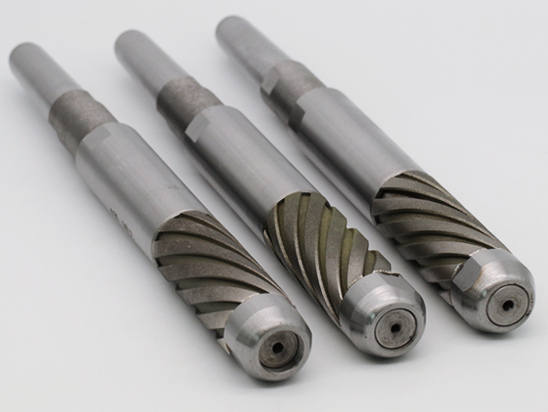
Our engineers design specific flute geometries (straight or helical) tailored to cast iron. This ensures:
- Efficient coolant flow to the cutting zone.
- Rapid evacuation of iron powder.
- Prevention of surface scratches, ensuring a consistent Ra (Surface Roughness).
Solving The “Cast Iron Challenge”
Why is Unquenched Cast Iron so difficult to process with standard tools? And how do we solve it?
Inconsistent Bore Straightness in Deep Holes
The Problem: When drilling or reaming deep holes (where the depth is 3x or 4x the diameter), standard tools tend to wander or deflect, creating “banana-shaped” holes.
Our Solution: The Single-Pass Diamond Reamer has a long abrasive section and a rigid pilot. It acts as a guide, ensuring the bore remains perfectly straight from entry to exit.
Rapid Loss of Tolerance
The Problem: Cast iron is highly abrasive. Standard abrasives lose their size quickly, requiring constant machine offsets and manual measuring.
Our Solution: Diamond is the hardest known material. When combined with our electroplating process, the tool holds its size for thousands of parts, enabling automated production with minimal operator intervention.
High Cycle Times
The Problem: Traditional honing strokes back and forth (reciprocating). This is slow.
Our Solution: As the name implies, our Single-Pass tool sizes the bore to the final tolerance in one single down-stroke. This can reduce cycle times by up to 50-70%.
Real Customer Case Study
Theory is good, but data is better. Below is a documented case study from a recent client utilizing Moresuperhard’s tooling solution.
Project Background:
The customer is a manufacturer of heavy-duty hydraulic components. They were struggling with a deep-bore application in Unquenched Cast Iron. Their previous process resulted in poor surface finish and tapered holes.
The Solution:
We implemented a multi-station Electroplated Single-Pass Diamond Honing Reamer system to progressively remove stock and achieve the fine finish required.
Technical Data & Machining Parameters
| Parameter | Specification / Value |
| Workpiece Material | Unquenched Cast Iron |
| Tool Type | Electroplated Single-Pass Diamond Honing Reamer |
| Processing Hole Diameter | 31.75 – 31.77 mm |
| Processing Depth | 115 mm |
| Processing Allowance | 0.04 – 0.06 mm |
| Surface Roughness Requirement | Ra 0.8 µm |
| Coolant | Honing Oil / Water-soluble Coolant |
The Grit Sequence Strategy
To manage the relatively large stock removal (up to 0.06mm) and achieve the surface finish of Ra 0.8µm, we recommended a specific 4-stage grit sequence. This balances material removal rates with surface quality.
- Station 1 (Roughing): #100 Grit – Removes the bulk of the material and corrects initial bore geometry errors.
- Station 2 (Semi-Roughing): #100 Grit – Continues size control and improves straightness.
- Station 3 (Semi-Finishing): #200 Grit – Refines the surface peaks and brings the bore close to final size.
- Station 4 (Final Finishing): #30 (Micron/Fine Grit) – The final polishing pass to achieve the Ra 0.8µm requirement and target diameter of 31.75–31.77mm.
(Note: The use of #30 in the final stage refers to a fine micropowder diamond size, crucial for achieving smooth surface textures on cast iron).
Result Analysis
- Deep Bore Stability: Processing a 115mm deep hole with a 31.75mm diameter yields a Length-to-Diameter (L/D) ratio of nearly 4:1. Despite this depth, the cylindricity was maintained perfectly due to the tool’s rigidity.
- Surface Finish: The transition from #100 to #30 grit successfully brought the roughness down to Ra 0.8µm, meeting the client’s strict specification.
- Efficiency: The customer successfully processed the 0.06mm allowance efficiently, eliminating the bottleneck in their production line.
Conclusion & Technical Consultation
The processing of Unquenched Cast Iron no longer needs to be a bottleneck in your manufacturing facility. By switching to Moresuperhard’s Electroplated Single-Pass Diamond Honing Reamers, you gain the advantage of speed, precision, and tool longevity.
Whether you are machining hydraulic valve bodies, connecting rods, or rocker arms, our engineering team is ready to design a custom solution for you.
Why Partner with Moresuperhard?
- Customization: We design tools based on your specific print tolerances and machine spindles.
- Expertise: Decades of experience in superhard abrasives and bore finishing.
- Global Service: We support customers worldwide with technical guidance and troubleshooting.
Ready to optimize your honing process?
Face the challenge of Unquenched Cast Iron with confidence. Let Moresuperhard help you achieve sub-micron precision and lower your cost per part.”
—EDITOR: Doris Hu, Erin Zhang
—POST:Doris Hu


