


Case of electroplated Single Pass Diamond Honing Reamer for Cast Iron
Due to its excellent wear resistance, vibration damping properties, and cost advantages, cast iron is widely used in the manufacturing of critical components such as engine blocks, pump bodies, and valve bodies. The machining accuracy of its internal bores directly determines the assembly performance and service life of these components. In the field of precision machining of cast iron internal bores, single-edge diamond honing tools, with their core advantages of “one-step forming, stable accuracy, and excellent efficiency,” are gradually replacing traditional multi-stage honing and reaming processes, becoming a key piece of equipment for addressing the challenges of cast iron internal bore machining.
Core Challenges in Precision Machining of Cast Iron Inner Bores
The unique characteristics of cast iron and the high precision requirements of inner bores present four major challenges in the precision machining process, directly impacting machining quality and production efficiency.
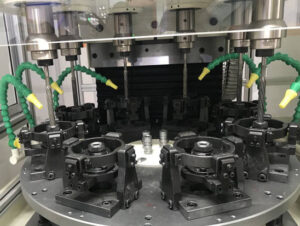
(I) Abrasive Wear and Surface Defects Caused by Graphite Flakes
The flake-like graphite distributed in the cast iron matrix leads to significant non-uniformity in material hardness: the graphite areas are soft with low cutting resistance;
the matrix and cementite areas have high hardness and high cutting resistance. This difference causes the tool edge to experience alternating abrasive wear during the cutting process, accelerating tool blunting;
at the same time, graphite flakes are easily detached under the action of cutting forces, scratching the inner bore surface and producing defects such as scratches and tears, damaging surface integrity.
(II) Inner Bore Size Fluctuations and Poor Roundness Consistency
In cast iron machining, factors such as cutting force fluctuations, tool wear, and thermal deformation easily lead to inner bore size drift, especially for deep holes and irregularly shaped holes, making it difficult to control dimensional tolerances within ±0.001mm;
at the same time, uneven force distribution on multi-edged tools and clamping errors can easily cause ovality and taper deviations in the inner bore, making it impossible to meet the roundness accuracy requirements of high-end components.
(III) Limitations of Traditional Multi-Stage Honing Processes
In traditional machining, multi-stage processes such as “rough reaming + fine reaming + honing” are often used to machine cast iron inner bores, which have three major shortcomings: firstly, low efficiency, as multiple processes require multiple clamping operations, extending the processing cycle and lacking sufficient capacity for mass production;
Secondly, poor repeatability, as tool wear and parameter fluctuations during process switching easily lead to inconsistent inner bore accuracy;
Thirdly, high cost, as multiple sets of tools, frequent replacement and regrinding increase the overall processing cost.
(IV) Common Causes and Consequences of Internal Bore Defects
During the precision machining of cast iron internal bores, defects such as chatter marks, scratches, and tapered holes are prone to occur. Their causes and consequences are significant: chatter marks are caused by cutting vibrations, affecting the surface finish and fit accuracy of the internal bore.
Scratches result from chip clogging and tool dulling, reducing the wear resistance of the internal bore;
Tapered holes are caused by sudden changes in cutting forces at the tool entry/exit points, directly affecting the assembly and sealing performance of the component.
Why Single Pass Diamond Reamers are Ideal for Cast Iron Machining
Single-edge diamond reamers are designed with the core principle of “completing precision machining in a single pass.” Combining the ultra-high hardness of diamond material with the stability of a single-edge structure, they fundamentally address the pain points of cast iron internal bore machining, demonstrating an irreplaceable advantage.
(I) Achieving both Accuracy and Roundness in a Single Pass
The single-edge structure avoids the uneven force distribution problems of multi-edge tools. The cutting force is concentrated and stable during the cutting process, allowing the tool’s own rigidity to correct the internal bore roundness, with roundness accuracy controllable to ≤0.0005mm. At the same time, a single pass replaces multiple processes, reducing clamping errors and dimensional drift, significantly improving the consistency of internal bore diameter and effectively ensuring precision in mass production.
(II) Shortening Processing Cycle and Reducing Scrap Rate
Single-edge diamond reamers improve processing efficiency by 3-5 times compared to traditional processes, eliminating the need for multiple process changes and significantly shortening the processing cycle. The diamond cutting edge is sharp and wear-resistant, effectively suppressing defects such as burrs and scratches, and the scrap rate can be controlled to below 0.5%, significantly reducing rework costs.
(III) Uniform Surface Texture, Enhancing Performance
By optimizing cutting parameters and tool structure, the internal bore processed by a single-edge diamond reamer can form a uniform cross-hatch pattern. The angle and depth of the pattern are controllable, which is beneficial for lubricating oil storage, improving the wear resistance and sealing performance of the internal bore. At the same time, the surface roughness can be stably controlled at Ra0.2-0.8μm, meeting the surface quality requirements of high-end cast iron components.
(IV) Reducing Tool Vibration and Avoiding Internal Bore Deformation
The single-edge structure provides a stable cutting path, and combined with the optimized cutting edge angle (rake angle 5°-10°), it effectively buffers the cutting force fluctuations in cast iron machining, reducing tool vibration. The excellent thermal conductivity of diamond material allows for rapid heat dissipation, preventing internal bore distortion caused by thermal deformation and ensuring processing stability.
Key Advantages of Sintered Diamond Single pass Honing Reamers
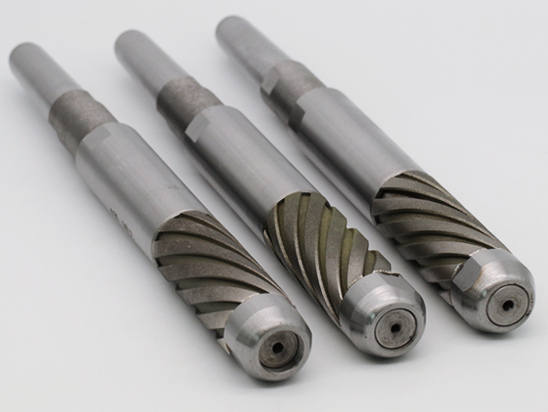
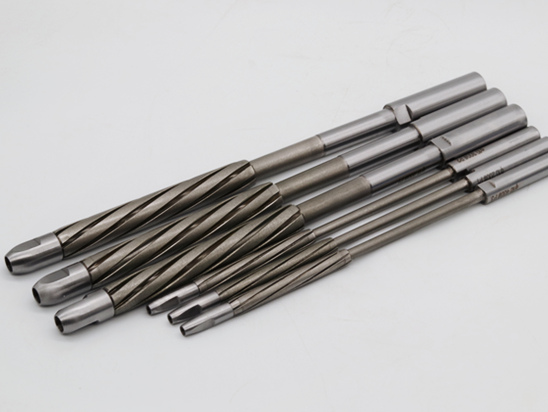
Sintered diamond single-edge honing reamers utilize a powder metallurgy sintering process, ensuring a strong bond between diamond particles and the binder. This makes them ideal for high-volume, heavy-duty machining of cast iron, offering significant advantages.
(I) Strong Diamond Retention, Suitable for Heavy-Duty Cutting
The sintering process firmly encapsulates the diamond particles within the binder, providing extremely strong retention. This allows the reamer to withstand the impact and abrasive wear of heavy-duty cast iron cutting, preventing diamond particle detachment. It enables larger cutting depths (0.05-0.1mm), meeting the needs for removing large amounts of material from the inner bores of cast iron blanks.
(II) Longer Lifespan and Excellent Performance Stability
The sintered binder has high hardness and wear resistance, resulting in high overall tool rigidity. Wear is slow during abrasive machining of cast iron, giving the tool a lifespan 5-10 times longer than carbide tools. Performance remains stable during long-term processing, preventing significant fluctuations in inner bore accuracy due to tool wear, making it ideal for high-volume continuous production.
(III) Heat and Wear Resistant, Suitable for Heavy-Duty Conditions
Sintered diamond tools have excellent heat resistance, able to withstand the high temperatures generated during cast iron machining (up to 800°C or more) without softening or failure. They also exhibit outstanding resistance to abrasive wear, making them particularly suitable for machining abrasive cast iron materials such as gray iron and ductile iron.
(IV) Ideal for High-Volume Machining of Core Components
With their long lifespan and high stability, sintered diamond single-edge honing reamers are especially suitable for high-volume production of core cast iron components such as engine blocks, pump bodies, and valve bodies. They significantly reduce tool change frequency, improve production efficiency, and lower unit machining costs.
Key Advantages of Electroplated Diamond Single Pass Honing Reamers
Sharp Cutting Edge, Excellent Surface Finishing
The electroplating process ensures uniform protrusion of diamond particles and a sharp cutting edge, resulting in low cutting resistance. This allows for rapid removal of surface defects in cast iron, producing a high-quality internal bore surface with no burrs or scratches. It is particularly suitable for precision finishing of cast iron internal bores, achieving mirror-like surface quality below Ra0.2μm.
Easy to Resharpen, Ensuring Contour Accuracy
Electroplated diamond tools are easy to resharpen. Worn cutting edges can be quickly repaired using a diamond dressing pen, ensuring the accuracy of the tool’s contour. For irregularly shaped or complex internal bores, resharpening quickly restores processing accuracy, making them suitable for multi-variety, small-batch production needs.
(VII) Suitable for Small-Batch and Special Bore Diameter Machining
The electroplating process has a short production cycle, allowing for quick customization of single-edge honing reamers with different bore diameters (Φ5-Φ100mm) and contours. This makes them suitable for small-batch, multi-variety machining of cast iron parts. For internal bores with special tolerance requirements (≤±0.001mm), they can accurately meet processing needs.
Prevents Graphite Smearing, Reduces Surface Defects
The sharp electroplated diamond cutting edge quickly cuts through graphite flakes in cast iron, preventing graphite from smearing onto the internal bore surface under cutting pressure, thus reducing scratches and tears. Simultaneously, chips are easily removed during the cutting process, further improving the internal bore surface quality.
Why is the electroplated diamond honing reamer more suitable for processing cast iron?
The inherent advantages of diamond abrasive
The diamond has extremely high hardness and good wear resistance. When processing cast iron, it shows the following characteristics: stable cutting; slow wear; good processing consistency;
In particular, during the fine processing with small allowances, the diamond abrasive can maintain a sharp state for a long time.
Electroplated structure, making “each abrasive particle is working”
The electroplated diamond honing cutter adopts a single-layer electroplating process. Its features are: high protrusion of abrasive particles; more direct cutting; less prone to polishing slip.
This enables it to both stably remove the allowances and maintain good hole wall quality in the processing of cast iron holes.
Very suitable for small allowances and stable mass production
The electroplated diamond honing cutter does not require a large cutting pressure; the processing process is controllable; the size repeatability is good.
This is also an important reason why it is widely adopted in mass production.
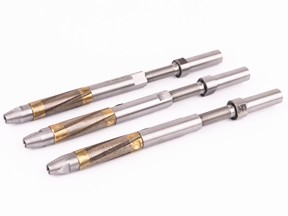
Electroplated diamond single-edge honing reamers utilize an electroplating process to attach diamond particles to the tool body surface, resulting in a sharp cutting edge. They are ideal for small-batch, high-precision finishing of cast iron internal bores.
Optimization Techniques for Selecting Cast Iron Machining Tools
To fully utilize the performance of single-edge diamond honing reamers, precise selection is required based on the characteristics of the cast iron material and machining requirements (rough machining/finish machining). Key parameters such as grit size, cutter head layout, and dimensional tolerances should be carefully considered.
Matching Selection of Diamond Grit Size
Grit size selection should match the machining process and surface quality requirements: For rough machining (material removal of 0.05-0.1mm), 80#-120# coarse grit is recommended, providing wide chip evacuation channels and high efficiency; for finish machining (material removal of 0.02-0.05mm), 150#-320# medium/fine grit is recommended, offering dense cutting edges and high surface finish; for mirror finishing, ultra-fine grit above 400# is recommended, suitable for surface requirements below Ra0.1μm.
Optimization of Cutter Head Layout and Chip Evacuation Design
The cutter head layout must ensure inner hole roundness and smooth chip evacuation: A single-cutter symmetrical layout can improve cutting stability and reduce vibration; the chip evacuation groove adopts a spiral design (spiral angle 30°-45°), with a groove width ≥2mm and groove depth ≥1.5mm, using centrifugal force to quickly remove cast iron chips and prevent clogging; the groove walls are polished to reduce chip adhesion.
Precise Matching of Tool Size and Tolerance
Match tool parameters according to the inner hole specifications: For large inner holes (diameter > 50mm), sintered diamond tools are preferred to ensure rigidity and lifespan; for small inner holes (diameter < 20mm), electroplated diamond tools can be selected to improve sharpness and accuracy; for inner holes with strict tolerances (≤±0.001mm), fine-grit tools should be selected, combined with precision grinding, to ensure dimensional consistency.
Adjustment based on workpiece hardness and graphite content
The tool selection should be adjusted for different cast iron materials: For high-hardness cast iron (such as QT600 ductile iron), sintered diamond tools should be selected to improve wear resistance; for gray cast iron with high graphite content (such as HT250), electroplated diamond tools should be selected to utilize their sharp cutting edges and reduce graphite smearing; for thin-walled cast iron parts, tools with a medium-soft binder should be selected to reduce cutting force and prevent workpiece deformation.
Customer Case
| Workpiece material | Unquenched cast iron |
| Processing hole diameter | 31.75 – 31.77 mm |
| Processing depth | 115 mm |
| Processing allowance | 0.04 – 0.06 |
| Surface roughness requirement | Ra 0.8 um |
| Suggested grit | 100/100/200/30 |
In the fine processing of unquenched cast iron holes, the electroplated diamond honing reamer, due to its advantages in materials, structure and processing methods, has become a mature and cost-effective option.
—EDITOR: Doris Hu, Erin Zhang
—POST:Doris Hu
Next:
This is already the latest article


