


Which Grit Wheel Should You Choose for Wood Turning Tools?
A Complete Guide for Wood Turners
In the field of wood turning, the sharpness and condition of the tool directly determine the precision and texture of the finished product, and the grit wheel is a core factor affecting the tool’s polishing effect. Different grit wheels will bring drastically different cutting performances, and the combination of wheel material and polishing system will also affect the overall turning process. This article will comprehensively break down the logic of grit wheel selection for wood turning tools, providing wood turners with a complete solution from basic understanding to practical selection.
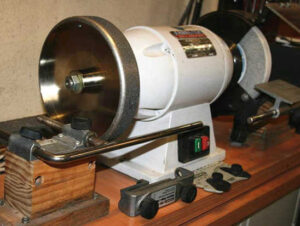
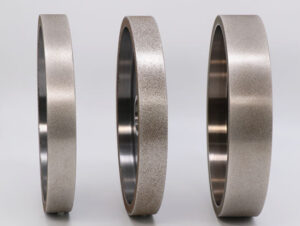
I. The Key Significance of Grit Wheel Grit for Wood Turning Tools
1. The Essential Difference Between Wood Turning Tools and Metal Cutting Tools
Wood turning tools are mostly made of high-speed steel (HSS) or carbide. Their core requirement is to create a razor-sharp cutting edge to achieve smooth cutting of the wood surface and avoid tearing the wood grain; while metal cutting tools focus more on material removal efficiency, and the precision requirements for the cutting edge are far lower than those for wood turning tools. Furthermore, the cutting-edge angle design of wood turning tools is more closely aligned with the cutting characteristics of wood, requiring precise preservation of its geometry during grinding.
2. The Importance of Cutting Edge Sharpness, Burr Control, and Heat Management
Cutting edge sharpness is fundamental to wood turning; a dull edge exacerbates cutting friction, leading to problems such as wood scorching and surface roughness. Burr control is equally crucial; uniform, small burrs (or no burrs) ensure the accuracy of subsequent fine grinding, while excessive burrs cause disrupted cutting trajectories. Heat management is the “lifeline” of high-speed steel tools; excessively high temperatures generated during grinding can damage the tempered layer of the steel, causing the cutting edge to soften and significantly shortening the tool’s lifespan.
3. The Relationship Between Grit Size and Cutting Performance and Differences in Grinding Wheel Material
Grinding wheel grit directly affects cutting performance: coarse-grit grinding wheels remove material quickly but produce a rough cutting edge, while fine-grit grinding wheels remove material slowly but create a smooth cutting edge. In terms of grinding wheel material, cubic boron nitride (CBN) grinding wheels exhibit far superior grit uniformity compared to traditional alumina grinding wheels. This allows for even grinding of tool edges, avoiding uneven bevels and providing a stable foundation for subsequent turning operations.
II. Analysis of CBN and Diamond Grit Wheel Mesh Sizes
1. FEPA and ANSI Grit Size Standards
There are two main standards for grinding wheel grit sizes: the European FEPA standard, prefixed with “F” (e.g., F180), which measures grit size in micrometers; and the American ANSI standard, which uses purely numerical designations (e.g., 180 grit), where a larger number indicates smaller grit and higher grinding precision. Woodworking turners need to be familiar with the correspondence between these two standards to accurately select grinding wheels.
2. The Impact of Grit Size on Grinding Efficiency, Surface Finish, and Edge Durability
- Grinding Efficiency: Coarse grit (low value) grinding wheels can quickly cut steel, suitable for tool reshaping and repair; fine grit (high value) grinding wheels have a slower grinding speed and are mostly used for fine edge finishing.
- Surface Finish: Fine-grit grinding wheels can create a smoother edge, reducing the need for subsequent oilstone or leather polishing; coarse grit grinding wheels leave a rough edge, requiring additional polishing to meet high-precision turning requirements.
- Edge Durability: Medium grit grinding wheels create a slightly textured edge that maintains sharpness longer in dense or wear-resistant woods; ultra-fine grit mirror-finish edges, while providing smooth cutting, are prone to rapid dulling under heavy-duty turning.
3. Grit Grading and Advantages of Electroplated CBN Grinding Wheels
- Coarse (80-120 grit): Used for heavy-duty material removal and repairing chipped edges.
- Medium (180-240 grit): The mainstay of daily grinding, balancing material removal speed and cutting edge quality.
- Fine (300-600 grit): Used for fine edge finishing, reducing burrs.
- Extra-fine (1000 grit and above): Suitable for finishing carbide tools or creating mirror-finish cutting edges for decorative turning.
Electroplated CBN grinding wheels, with their tightly bonded, uniformly sized abrasive grains, achieve a sharper and cleaner grinding effect. Unlike loose or ceramic-bonded abrasive grains, electroplated CBN abrasive grains will not shatter or become clogged with steel debris, maintaining stable grinding performance over a long period.
III. Recommended Grit Sizes for Different Wood Turning Tools
1. Suitable Grit Size Ranges for Various Tools
- Bowl-shaped turning tools (180-240 grit): Requires heavy-duty cutting of bowl blanks. Creates a durable cutting edge to prevent chipping.
- Shaft turning tools (240-300 grit): Used for fine contour machining of shafts, pen barrels, etc. Ensures smooth cutting edges.
- Beveling chisels (300-600 grit): Relies on extremely sharp cutting edges to achieve mirror-finish cutting. Minimizes burrs.
- Cutting blade (180-240 grit): Combines strength and efficiency for stable cutting operations.
- Scraper (80-180 grit, depending on burr requirements): 80-120 grit coarse grit creates powerful burrs; 150-180 grit medium grit forms fine burrs.
2. The Impact of Grit Selection on Turning Performance and Tool Life
An appropriate grit significantly improves turning efficiency: a sharp and regular cutting edge reduces cutting friction, lathe vibration, and tool wear, extending its service life; conversely, an inappropriate grit results in irregular cutting edges, affecting product quality and accelerating tool wear.
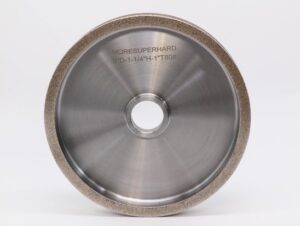
IV. Grit Matching Schemes for Grinding Systems
1. Selection of Single-Grit and Double-Grit Grinding Wheels
Single-Grit Grinding Wheels: A 240-grit CBN wheel is optimal for daily grinding of most tools, with simple polishing afterward.
Double-Grit Grinding Wheel Combinations: Efficient combinations include 80 grit + 180 grit (tool shaping) and 180 grit + 600 grit (daily dressing + fine edge). Choose based on turning needs.
2. Compatibility of Grinding Wheel Diameter, Width, and Variable Frequency Grinding Machines
Large-diameter wheels are suitable for long blades; small-diameter wheels for fine areas. Wide wheels handle large bevels; narrow wheels handle edges precisely. Variable frequency grinders help control heat and improve grinding controllability.
V. Comparison of Grit Size Performance between CBN Grinding Wheels and Traditional Grinding Wheels
1. The Advantage of Low-Temperature Sharpness in Grinding with CBN Grinding Wheels
CBN wheels maintain low-temperature cutting, preserving edge sharpness and preventing HSS damage—an advantage alumina wheels cannot match.
2. Performance Comparison Table of Three Major Grinding Wheels
| Grinding Wheel Type | 80 Grit | 180 Grit | 240 Grit | 600 Grit | 1000 Grit | Applicable Scenarios |
|---|---|---|---|---|---|---|
| CBN Grinding Wheel | Fast material removal, slightly coarse cutting edge | Balance between material removal and cutting edge quality | Mainstay for daily grinding | Fine cutting edge, high surface finish | Mirror-like cutting edge, smooth cutting | Suitable for all-process grinding of HSS tools |
| Alumina Grinding Wheel | Fast material removal but abrasive particles easily fall off | Uneven cutting edge grinding | Suitable for basic dressing | Low grinding efficiency, prone to overheating | Poor effect, not recommended | Low-cost, simple grinding |
| Diamond Grinding Wheel | Fast material removal, high hardness | Relatively smooth cutting edge | Suitable for carbide tools | Good fine grinding effect | Excellent mirror finish | Dedicated to carbide tools |
3. Core Advantages of Electroplated CBN Grinding Wheels
- No wheel dressing required, maintaining initial profile long-term.
- Full surface abrasive coverage supports side grinding.
- Long service life reduces long-term grinding costs.
VI. Grit Matching Techniques for Different Grinding Styles
1. Grit Selection for Beginners, Professional Turners, and Mass Production Turning
- Beginners: 180-240 grit medium-grit wheels for easy control and avoiding tool damage.
- Professional Turners: 300-600 grit fine-grit wheels for high-precision edges and smooth finishes.
- Mass Production: 80-120 grit coarse-grit wheels for efficient tool dressing and stable production.
2. When to Upgrade to Moresuperhard Electroplated CBN Grinding Wheels and Damage Prevention Techniques
Upgrade when conventional wheels fail to meet precision. Control pressure and speed to prevent overheating, tempering, or micro-cracks in HSS tools.
VII. Conclusion: Ideal Grit Selection for Wood Turning Processes
1. Core Summary of Grit Selection
The grit selection should follow the principle of “adapting to needs”: 80 grit for shaping, 180-240 grit for routine dressing, 600 grit or higher for high-precision grinding. Transition gradually from coarse to fine.
2. The Long-Term Value of High-Quality CBN Grinding Wheels
High-quality CBN wheels, though costly initially, provide stable grinding, extend tool life, and improve product quality. Kingstone Superhard’s electroplated CBN grinding wheels are recommended for woodworking turners seeking long-term, efficient operations.


