


How to make diamond rotary dresser?
What is a Diamond Rotray Roller and What are its Core Applications?
In modern precision manufacturing, the diamond rotay roller (also known as a Diamond Rotary Dresser) is hailed as the ultimate “dressing tool” for grinding applications. Utilizing high-strength diamond particles as the abrasive—firmly bonded to a metal matrix via powder metallurgy sintering, electroplating, or CVD processes—it is specifically designed to precisely dress and form various complex grinding wheels (such as CBN wheels and traditional vitrified wheels).
Compared to traditional single-point diamond dressers, diamond rotay rollers offer significant advantages: extremely high dressing efficiency, excellent profile retention, and a remarkably long lifespan. Currently, they are widely used in advanced manufacturing sectors that require high-volume, high-precision form grinding, including: the automotive industry (e.g., crankshaft and camshaft grinding), aerospace (e.g., turbine blade forming), precision bearings and gear transmissions, core robotics components, and high-end tool manufacturing.
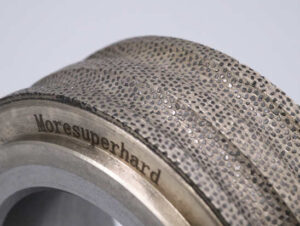
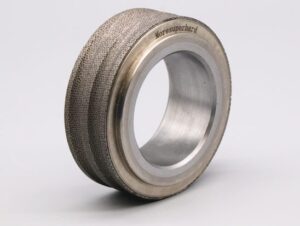
The manufacturing precision of a diamond rotay roller directly determines the maximum quality limits of the customer’s final machined parts. For processing enterprises pursuing high efficiency and precision, understanding the production steps behind these tools is crucial. This article will take you to the frontlines of our production facility to break down the complete manufacturing workflow of high-precision diamond rollers.
Preparation — High-Precision Graphite Mold Customization
The forming of a diamond rotay roller relies entirely on an accurate mold. Our first step begins with the preparation of the base material:
1. Graphite Mold Preparation: We purchase high-quality graphite ingots and precisely cut them into uniform blocks, which serve as the foundation for the subsequent core molding process.
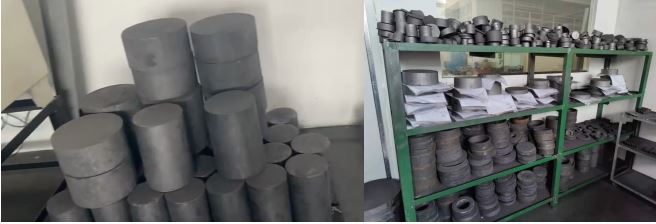
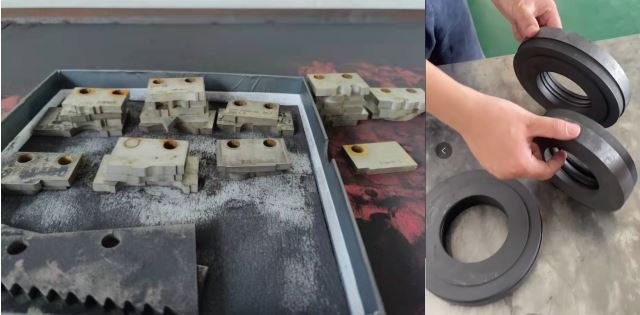
2. Internal Profile Machining: The accuracy of the mold dictates the initial precision of the roller. Based on the customer’s required roller profile drawings, we custom-order specialized cutting tools. These precision tools are used to machine the required complex shapes inside the prepared graphite blocks, forming a standard, high-precision graphite cavity.
Core Process — Diamond Implantation & High-Temperature Sintering
Once the cavity is ready, we enter the core manufacturing stage that determines the roller’s cutting performance:
-
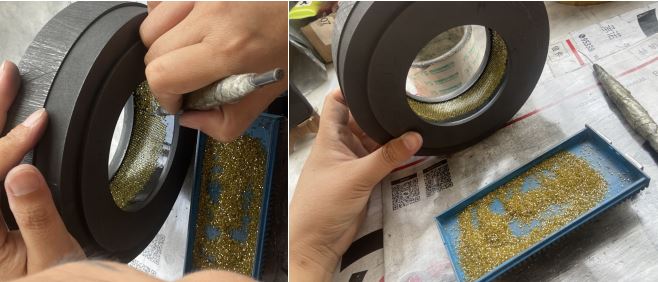
3. Manual Diamond Implantation: This is a process requiring immense patience and experience. Professional operators manually and densely implant diamond particles onto the inner wall of the machined graphite cavity, ensuring the abrasive distribution of the working layer perfectly meets design specifications.
-
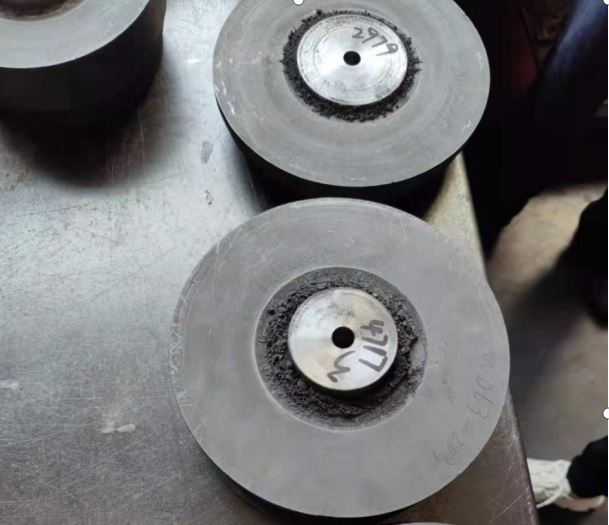
4. Metal Powder Filling and Furnace Firing: The metal roller body is accurately placed in the absolute center of the graphite cavity. The cavity is then filled with a specific metal powder (acting as the binder). Once assembled, the entire unit is placed into a high-temperature furnace for firing (sintering), allowing the metal powder and diamonds to bond securely to the core body under extreme heat.
Post-Processing — Demolding & Precision Machining
After firing, the diamond rotay roller has only completed its “forming” phase. It immediately enters the machining stage to be endowed with mechanical assembly precision:
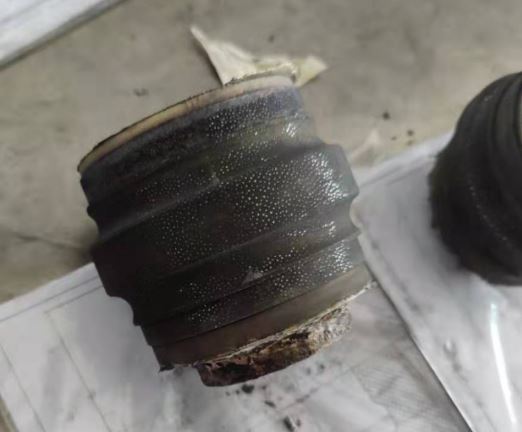
5. Destructive Demolding: After the firing is complete and the unit has cooled, we use a destructive demolding method—breaking the graphite mold carefully—to extract the formed diamond rotay roller blank. This ensures the absolute integrity of the diamond working layer.
6. Machining the Inner Hole and End Face:
After extraction, the blank enters the machining workshop. Here, technicians operate specialized lathes and grinding equipment to carefully cut and polish the inner bore and both end faces of the roller. This step acts as the “stabilizing anchor” of the entire manufacturing workflow, primarily solving the issue of installation references.
Ultimately, the diamond rotay roller must be precisely mounted onto the spindle of the customer’s grinding machine. Precision machining of the inner bore ensures a perfect fit between the roller’s inner diameter and the equipment spindle; machining the end faces guarantees the perpendicularity of the roller once locked into place. Only when the dimensional accuracy of the inner hole and end faces meets the standards can we fundamentally eliminate the mechanical runout that might occur during high-speed rotation, laying a completely stable physical foundation for subsequent profile dressing and the final grinding tasks.
Precision Guarantee — Profile Dressing, Practical Verification & Strict Inspection
The true value of a diamond rotay roller lies in its extreme profile replication capabilities. Therefore, pre-shipment dressing and “reverse verification” testing are the most critical steps in determining whether a product is ready for delivery:
7. Dressing the Surface Contour Accuracy:
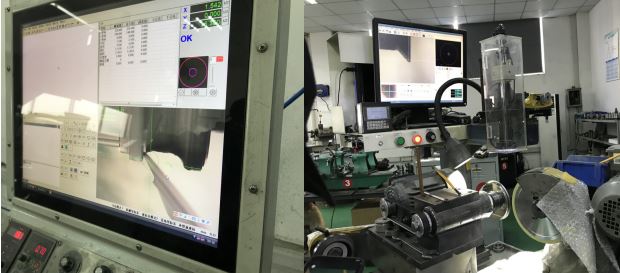
After basic machining, the roller undergoes the core procedure that defines its final shape. Because diamonds are exceptionally hard, conventional cutting tools are ineffective. Therefore, we utilize customized vitrified diamond grinding wheels to precisely dress the roller’s surface in a “hard-against-hard” approach.
As shown on our CNC operation interfaces, this entire dressing process is completed under the visual monitoring of a high-precision system. The system not only displays real-time X-axis and Z-axis coordinate data but is also equipped with high-definition visual monitoring. The system continuously compares the actual dressing trajectory against the theoretical tolerance ranges from the drawings, precisely removing excess binder. Only when all indicators strictly meet the standards (and the interface displays “OK”) can we ensure that the complex profile of the roller perfectly replicates the engineering drawings.
8. Sample Bar Grinding and Profile Verification:
Once dressing is complete, how do we objectively prove that the precision is up to standard? We employ the industry’s most rigorous “simulated combat” step: the Sample Bar Grinding Method.
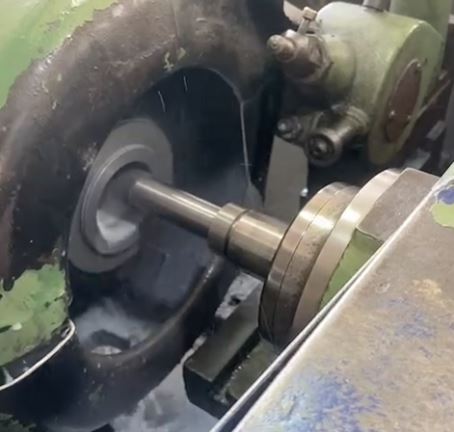
First, the newly dressed diamond rotay roller is installed on a cylindrical grinding machine and used to actually dress a standard white fused alumina grinding wheel. Subsequently, the operator uses this dressed white alumina wheel to grind a metal sample bar. Finally, the machined sample bar is sent to the inspection room, where specialized testing instruments comprehensively scan and evaluate its profile. Because directly measuring a diamond surface can yield microscopic errors, this reverse-deduction method means the final molded accuracy of the sample bar is 100% equivalent to the true working accuracy of the diamondrotay roller. This serves as the most powerful physical verification of surface contour accuracy.
9. Comprehensive Inspection and Safe Packaging:
After confirming that the profile accuracy is flawless, the quality inspection department uses high-precision measuring instruments to conduct a comprehensive check of key mechanical indicators, most importantly the runout. Only diamond rotay rollers that successfully pass every single parameter check are carefully packed with anti-collision materials and safely shipped to our customers worldwide.
Next:
This is already the latest article


